
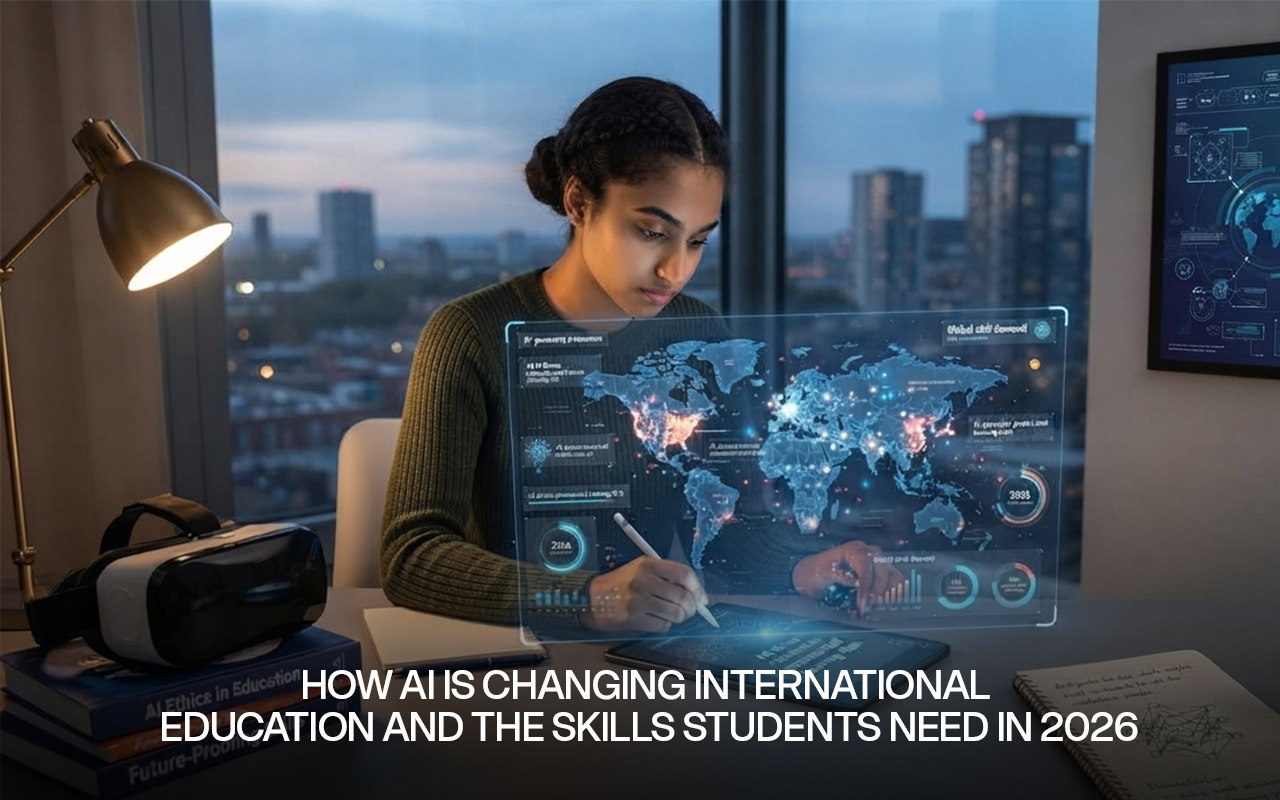
AI is now a topic that appears in every conversation. From business settings and workplaces to classrooms and university debates, artificial intelligence is reshaping how people think, work, and learn. Some people view AI as just a tool that simplifies everyday chores while others question how AI will alter the way students learn and teachers teach.
The discussion gains more weight when we talk about international education. More students are travelling abroad for education, worldwide experience and improved career prospects. AI is now beginning to guide their path in fresh ways. From picking courses to grasping topics, AI’s influence keeps expanding. Thus what does this mean for students who plan to study in 2026 and which skills will they need to stay ahead?
This article gives you the answer!
Personalised Learning Across Different Countries
A major benefit of using AI in education is that it can support various learning needs. Rather than applying the same method to all students, digital learning systems are able to provide alternative explanations, extra practice, and feedback according to each student’s individual performance.
Those students who intend to study in Germany or study in Australia may find that the academic settings they enter place a strong emphasis on research, practical application, and self-directed learning, depending on the course they have chosen. Students can make use of AI tools to help them with preparation for technical subjects, to organise their research materials and to practise problem-solving before applying what they have learned in actual academic situations.
Students can also use AI-assisted language tools as a way of practising different languages like French, Spanish etc for improving their comprehension and gaining greater comfort in communicating across cultural and linguistic boundaries. That said, it is only through regular conversation, listening practice, and involvement with local communities that true language proficiency can be achieved.
This highlights how technology can support international learning and at the same time enable students to develop the academic and cultural skills needed to get used to their new environment.
The Essential Skills Students Need in 2026
Although AI can make many school tasks easier, using technology well means more than knowing which programs to use. Students need to build a mix of digital, intellectual and social skills.
Critical thinking and the ability to analyze: AI-made information might have mistakes or not explain things clearly. Students should confirm what they read, check facts with sources, look at different opinions and decide for themselves.
Ai knowledge: It’s important to understand how AI tools function, when they can help and what they can’t do. Students also need to know about keeping their information safe, how bias can affect AI and how to use technology properly.
Communication and language skills: Learning in countries means working with people from all over the world. Being able to write, speak confidently, listen carefully and talk across cultures is still very important in school and at work.
Creativity and Problem Solving: AI can give ideas. Students must learn to look at those ideas, think about challenges, in new ways and come up with their own answers. Real projects and working with others help build these skills.
Flexibility and learning on their own: Studying in a country often means getting used to new ways of teaching, different rules and new places. The ability to learn by themselves and deal with changes can make this move easier.
Responsible AI Use in Academic Life
Although AI provides many advantages, relying on it too much can impair a student’s capacity to carry out research, compose writing, and solve problems on their own. Moreover, handing in assignments which have been produced by AI without understanding the help that has been obtained or by acknowledging the use of that help may breach academic integrity policies.
Students should therefore regard AI as a supportive resource; it can be of help in explaining difficult concepts, in suggesting possible research avenues, or in spotting weaknesses in a draft. The final work, though, must show the student’s own understanding and comply with the institution’s rules regarding AI use.
It is just as important to learn how to use technology responsibly as it is to learn how to use it efficiently, since such habits will enable students to meet the academic requirements and take on the professional duties expected of them after they graduate.
How Students Can Prepare for an AI-Driven International Education System
Today’s preparation for studying abroad goes beyond just choosing a course and meeting the admission requirements; students also need to think about how they will get used to technology-assisted learning, how they will handle independent assignments, and how they will communicate confidently in multicultural settings.
It is here that professional advice can be of use. Those students who consult study abroad consultants in Thodupuzha can get help with choosing courses, meeting the application requirements, providing the necessary documentation, and planning their destination. In addition to this practical preparation, students should work on improving their digital literacy, enhance their language abilities, and become acquainted with the responsible use of AI. Taking these steps prior to leaving will help students to feel more confident and to have a better understanding of what modern universities expect from them.
Preparing for the Future of International Education
International Education is undergoing a revolution due to artificial intelligence, but it has not made human intelligence, curiosity, or meaningful learning more valuable.
In 2026, the students with a combination of tech-savviness, critical thinking, creative capacity, effective communication, and cultural intelligence shall be best placed to navigate changing academic and professional ecosystems.
Studying abroad remains an opportunity to gain much more than a qualification. With the right preparation and a willingness to keep learning, students can use international education to build the skills, perspective, and confidence needed for a future shaped by both human potential and artificial intelligence.