

Looking for a destination that’s globally recognized, home to universities ranked among the world’s best, and built on academic excellence, real-world readiness, and career acceleration? If yes, Australia is your strongest choice. It hosts top-tier institutions for business, tech, health, and the arts, with campuses renowned for innovation, deep industry integration, and global impact that can truly fast-track your future.
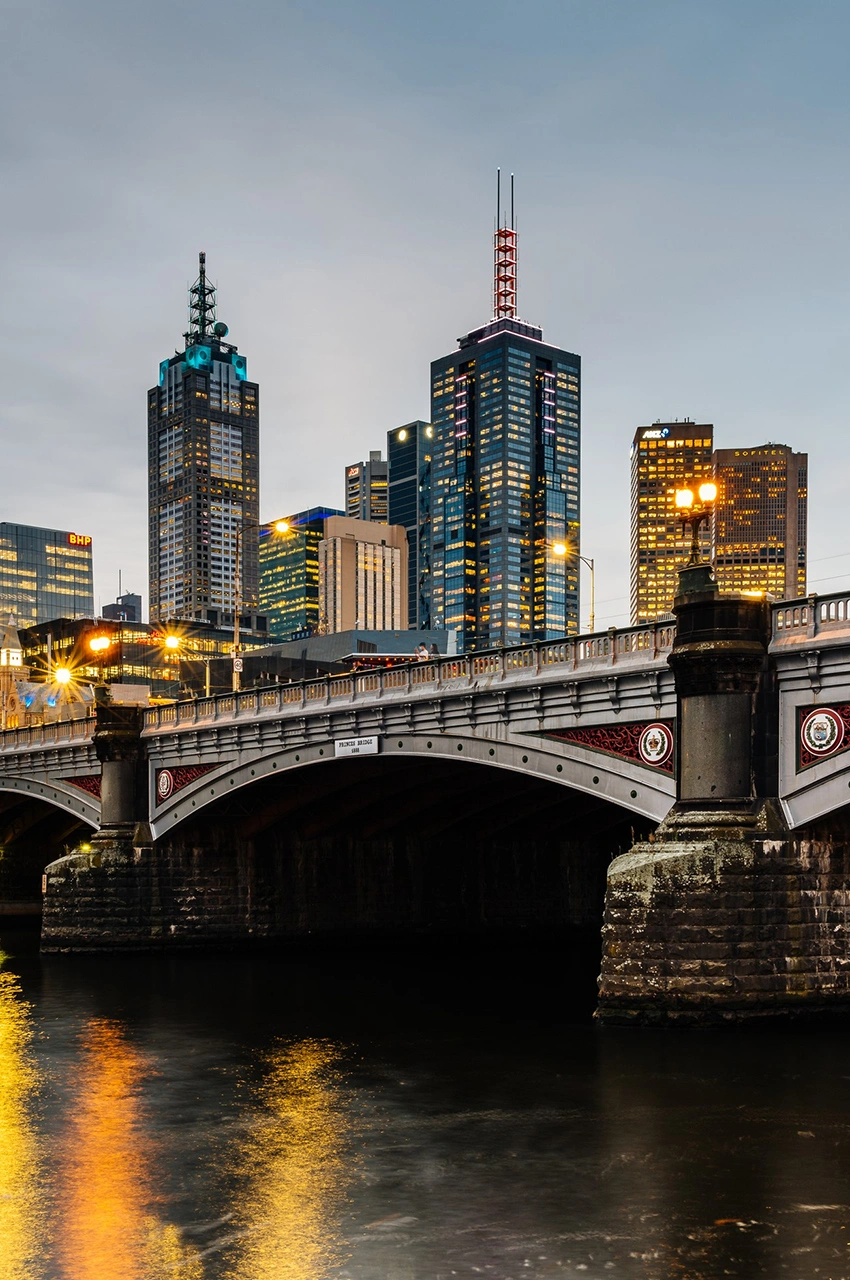
Both Melbourne and Sydney have found themselves placed well up the ranking of QS Best Student Cities, at #5 and #4 respectively.The ranking criteria include students’ diversity, employers’ presence, livability, and universities’ quality.
UNSW Sydney leads Australia at #19 globally, followed by Melbourne (#22), Sydney (#28), ANU (#29), and Monash (#31) in the QS World University latest Rankings, alongside nine Australian institutions now sit in the global top 100.
Indian graduates can access up to four years of post-study work rights, with high demand in engineering, IT, healthcare, finance, and emerging tech sectors.
Safe, multicultural, and scenic, this country offers world-class healthcare, efficient public transport, and a balanced lifestyle between study, work, and leisure.
End-to-End Student Support: From arrival orientation and accommodation help to legal guidance, mental health services, and career coaching, universities ensure you’re supported at every stage.
The tuition fees for international students in Australia vary depending on the academic qualification, institution, and area of study. As a rule, arts, humanities and teaching courses are relatively cheaper than other programs; while the programs in the medical, dental, veterinary and engineering fields are more expensive. Studying for a postgraduate qualification may have fee higher than undergraduate programs; and the total fee is determined by the individual university and course selected.
|
S.No. |
Australia Study Program |
Average Fees (AUD) |
|
1 |
School (Primary/Secondary) |
AUD 8,000–32,000 per year |
|
2 |
English Language Studies |
AUD 300–500 per week |
|
3 |
Certificate Courses (Certificates I to IV, Diploma, and Advanced Diploma) |
AUD 6,000–28,000 per year |
|
4 |
Foundation/Pathway Courses |
AUD 18,000–49,000 total course |
|
5 |
Undergraduate Bachelor’s Degree |
AUD 20,000–65,000 per year |
|
6 |
Postgraduate Master’s Degree (Coursework) |
AUD 22,000–65,000 per year |
|
7 |
Doctoral Degree (PhD/MPhil) |
AUD 20,000–58,400 per year |
Before finalising your admission, carefully review the latest information on the university and course, as fees, requirements, and other details may vary and are subject to change.
The cost of living in Australia varies depending on your rent or if there are shared houses available for rent. The following is a rough budget guide for what to expect in terms of costs of living in Australia.
|
Expense Category |
Typical Estimated Cost / Week |
|
Accommodation — Shared House/Flat |
AUD 160–250 |
|
Accommodation — Studio/One-Bedroom |
AUD 350–500 |
|
Utilities (Electricity, Gas, Water, Internet) |
AUD 30–50 |
|
Food & Groceries |
AUD 100–150 |
|
Public Transport |
AUD 6–30 |
|
Mobile Phone |
AUD 10–20 |
|
Entertainment & Social Activities |
AUD 40–60 |
|
Clothing, Household Items & Incidentals |
AUD 25–50 |
|
Total — Shared Accommodation |
AUD 371–610 |
|
Total — Studio/One-Bedroom |
AUD 561–860 |
For a bachelor’s-degree graduate, the AUD 2,500 visa cost can be recovered in roughly 110 hours of work at the national minimum wage before tax, about three weeks of full-time minimum-wage work. Typically over a 2-4 years with possible extensions in some cases, 485 visas could generate about AUD 104,500 before tax, superannuation and living costs.
Actual earnings are often higher in fields such as IT, engineering, nursing, accounting, construction, and skilled trades, but they depend on the role, employer, location, experience, and professional-registration requirements. The 485 visa is temporary and does not guarantee permanent residency; graduates commonly use it to gain Australian work experience and pursue skilled-migration or employer-sponsored pathways.
These scholarships are open to international students, including Indian students who hold a valid Indian passport and are residing in India.
| S.No. | University | Scholarship Name | Year(s) Available | Value / Benefit | Open to Indians? | Official Source |
|---|---|---|---|---|---|---|
| 1 | Adelaide University | Adelaide Global Academic Excellence Scholarship | 2027–2028 | 50% tuition fee reduction | Yes | Adelaide – Academic Excellence 50% |
| 2 | Adelaide University | Adelaide Merit Scholarship | 2027–2028 | 15% tuition fee reduction | Yes | Adelaide – Merit 15% |
| 3 | Adelaide University | Adelaide Emerging Leaders Award | 2027–2028 | 25% tuition reduction | Yes | Adelaide – Emerging Leaders |
| 4 | Bond University | International Undergraduate Excellence Scholarship | 2027–2028 | Up to 50% tuition remission (UG) | Yes | Bond – Excellence |
| 5 | Bond University | International Stand Out Scholarship | 2027–2028 | 25% tuition remission (UG/PG) | Yes | Bond – Stand Out |
| 6 | Curtin University | John Curtin Global Excellence Scholarship | 2027–2028 | Up to 100% tuition + stipend (research) | Yes | Curtin Scholarships |
| 7 | Curtin University | Curtin Global Merit Scholarship | 2027–2028 | 25% tuition reduction | Yes | Curtin Scholarships |
| 8 | Curtin University | Curtin Global Future Leaders Scholarship | 2027–2028 | AUD $10,000 one-off credit | Yes | Curtin – Future Leaders |
| 9 | Federation University | Vice-Chancellor’s Award | 2027–2028 | Up to 50% tuition reduction | Yes | Federation – 2027 Schedule |
| 10 | Federation University | Federation Merit Scholarship | 2027–2028 | 20–30% tuition reduction | Yes | Federation – Scholarships |
| 11 | Griffith University | International Academic Merit Scholarship | 2027–2028 | 20% off tuition | Yes | Griffith – International Merit |
| 12 | Griffith University | Vice Chancellor’s International Scholarship | 2027–2028 | Up to AUD $10,000 | Yes | Griffith – Scholarships & Finance |
| 13 | James Cook University (JCU) | JCU International Excellence Scholarship | 2027–2028 | 25% tuition reduction (full degree) | Yes | JCU – International Excellence |
| 14 | La Trobe University | La Trobe High Achiever Scholarship | 2027–2028 | 20–25% off tuition | Yes | La Trobe – High Achiever |
| 15 | La Trobe University | Early Acceptance Grant – International | 2027 | AUD $3,000–$5,000 | Yes | La Trobe – Fees |
| 16 | The University of Newcastle (Australia) | International Excellence Scholarship | 2027–2028 | 20% of annual tuition | Yes | Newcastle – International |
| 17 | The University of Newcastle (Australia) | Women in STEM Scholarship (IDP partnership) | 2027 | Varies (partial/full) | Yes | IDP – Newcastle STEM |
| 18 | University of New England (UNE) | UNE International Scholarship | 2027–2028 | 20% off tuition | Yes | Study Australia – UNE |
| 19 | University of Notre Dame Australia | International Welcome Scholarship (UG/PG/Nursing) | 2027–2028 | 20–30% off tuition | Yes | ScholarshipAU – Notre Dame |
| 20 | University of Western Australia (UWA) | Global Excellence Scholarship | 2027–2028 | 10–20% off tuition | Yes | UWA – Global Excellence |
| 21 | Western Sydney University | Western Sydney International Scholarship (UG/PG) | 2027–2028 | AUD $5,000–$10,000 per year | Yes | Western Sydney – International |
In Australia, you will find three major intakes every year, meaning you can start your university studies at different times.
|
No. |
Intake |
Start Period (2027–2028) |
Availability |
|
1 |
Semester 1 (February Intake) |
Mid-February to early March 2027 |
All universities; widest course selection |
|
2 |
Semester 2 (July Intake) |
Early July to early August 2027 |
Most universities; strong in IT, Business, Science |
|
3 |
Semester 3 / Trimester 3 (November Intake) |
Late October to November 2027 |
Select universities (RMIT, Deakin, Griffith); limited programs |
The February (Semester 1) intake is the primary entry point, offering the widest range of programs, including competitive courses like Medicine, Engineering, and Law. The July (Semester 2) intake is a strong secondary option, popular for IT, Business, and Science. The November (Semester 3) intake is available at select universities, best for VET, diplomas, and pathway programs, with limited options for professional degrees.
The subclass 500 of the Australian student visa enables worldwide students to study at an accredited Australian educational institution . The following things are important for Indian students who are planning to enroll in the intake of 2027.
The required score for English depends on your course and your circumstances in life. The average minimum scores include:
Some pathways or English-language courses may have different requirements. Always follow the score requested for your application.
You may need to prove that you can pay for:
The minimum living-cost amount for the main student is currently AUD 29,710 per year. You should have realistic funds available and should not depend entirely on part-time work.
For an Australian Student visa, Indian students generally need:
The final list depends on your passport and education provider. Check the official Australian Document Checklist Tool before applying.
Here are the most popular courses that international students and Indian students choose to study in Australia:
The best part about studying in Australia is that you will never have any dearth of high-quality education because the country is home to numerous top-ranked universities globally. The below list highlights Australian universities that feature among the top ranks as per the latest QS World University Rankings.
| No. | Name of the University | QS World University Rank 2027 |
|---|---|---|
| 1 | The University of New South Wales (UNSW Sydney) | 19 |
| 2 | The University of Melbourne | 22 |
| 3 | The University of Sydney | 28 |
| 4 | Australian National University (ANU) | 29 |
| 5 | Monash University | 31 |
| 6 | The University of Queensland | 40 |
| 7 | The University of Western Australia | 77 |
| 8 | Adelaide University | 79 |
| 9 | University of Technology Sydney (UTS) | 87 |
| 10 | RMIT University | 119 |
| 11 | Macquarie University | 126 |
| 12 | Curtin University | 189 |
| 13 | University of Wollongong | 195 |
| 14 | Deakin University | 227 |
| 15 | Griffith University | 230 |
| 16 | Queensland University of Technology (QUT) | 240 |
| 17 | La Trobe University | 241 |
| 18 | The University of Newcastle, Australia | 244 |
| 19 | Swinburne University of Technology | 291 |
| 20 | University of Tasmania | 311 |
Study, work and gain valuable experience in Australia! International students on a student visa can work part-time for up to 48 hours every two weeks while their course is in session, giving them an opportunity to gain practical work experience, build skills and make the most of their Australian study journey.
As an international student in Australia, you can explore a variety of part-time work opportunities alongside your studies. Here are some common employment options:
Get personalised guidance on courses, colleges, eligibility and the next steps for studying in Australia
Start your academic journey now!
Destine uses her extensive experience to provide students with accurate guidance throughout the study abroad process.
Destine has a track record of successful student journeys. It reflects the commitment and success of Destine in providing reliable and personalised guidance.
The process provides students with a complete understanding through transparent and simple steps which contain no hidden elements.
Each student gets personalised support which includes customised assistance that matches their individual needs and objectives and preferred methods of learning.


The requirements depend on the university and the particular course. Usually, students need to satisfy the educational qualifications, demonstrate knowledge of English, and fulfill all other requirements set by the institution
Yes, some Australian universities accept the Indian educational system 10+2+3. However, eligibility for a course is determined according to the university admission requirements and academic record.
The Student Visa Subclass 500 is a visa that allows international students to study in Australia . It allows candidates studying in Australia to work under the visa terms.
Yes, foreigners are allowed to work for not more than 48 hours every fourteen days during the studying period. During study breaks foreign nationals can work for an unlimited period.
The real expenses will depend on the way of living and the place of accommodation.
Yes, most foreign students are required to obtain health insurance while being in Australia.
Yes, students are allowed to take packaged course programs if there is a clear continuation between the courses followed.
The English language requirements vary from one university to another. Although many universities accept the IELTS score, the other universities might consider other tests.
Under acceptable conditions, students with Student visas may be able to bring certain family members to Australia. Other visa conditions in terms of finances, health and insurance may apply.
A change of course may be possible in certain circumstances but it depends on the regulations of the visa and you are enrolled with. It is recommended to check whether the change could affect your visa.
CoE refers to the official document from Australian educational institutions which certifies the student’s enrolment in the course. It is crucial for visa application purposes.
Yes, various universities and educational institutions offer scholarships for eligible international students. Each institution has its own application and student eligibility criteria.